Benedict's Law: what schools and clubs need to know
Written by The MagicBooking Team | Jul 28, 2026
9 min readBenedict’s Law is new statutory legislation that makes allergy safety a legal requirement in all maintained schools, academies, and pupil referral units in England from September 2026.
Named in memory of five-year-old Benedict Blythe, who died following an allergic reaction at school in 2021, the school allergy safety bill replaces voluntary guidance with four clear legal duties: a published school allergy policy, annual anaphylaxis training for all staff, spare adrenaline auto-injectors (AAIs) on site, and Individual Healthcare Plans for every pupil with a diagnosed allergy.
This guide explains what Benedict’s Law schools must do to comply – including what it means for clubs and provisions running alongside the school day.
Reviewing how your school or club manages allergy records this summer? Book a free MagicBooking demo and see how child health notes keep allergy information accessible across every provision.
Fancy skipping the read? Get in touch for tailored advice on how we can help you.
What is Benedict's Law and why does it matter?
Benedict Blythe died at school in 2021. He was five years old. His parents, Helen and Peter Blythe, spent four years campaigning for a change in the law – a campaign that led directly to what we now know as Benedict’s Law.
“For 4 years, we have campaigned for Benedict’s Law so that no child faces the preventable gaps in allergy safety that cost our 5-year-old son his life.
We are grateful the government has listened, and that from September schools will be required to have allergy pens, training and policies in place – protections that were not there when Benedict joined his school.
Knowing that future children will enter a system far safer than the one he did is a powerful and lasting legacy for our son Benedict.” – Helen Blythe and Peter Blythe, GOV.UK, March 2026
Before Benedict’s Law, schools followed the school medical conditions policy guidance on a voluntary basis. That guidance was non-statutory, and implementation was inconsistent. The school allergy safety bill changes that entirely.
Benedict law is now formally enshrined in the Children’s Wellbeing and Schools Act 2026, which amends the Children and Families Act 2014. The Department for Education has published statutory guidance on allergies for schools, setting out the exact requirements that all schools must meet. The DfE allergy guidance schools must follow is titled Allergy Safety in Schools and is available at GOV.UK.
The scale of the issue makes this legislation overdue. An estimated 500,000 days of learning are lost each year to allergy-related illness or medical appointments. Around two children in every classroom in England have a diagnosed allergy. Up to 30% of serious allergic reactions happen in people with no prior allergy diagnosis – which is precisely why a whole-school approach to anaphylaxis in schools matters so much.
Who does Benedict's Law UK apply to from September 2026?
From September 2026, Benedict’s Law UK applies to:
- All maintained schools (state-funded primary, secondary, and special schools)
- Academies and free schools
- Pupil referral units (PRUs)
- Early years settings
Independent schools have until spring 2027 to comply.
The school allergy requirements 2026 apply to all on-site provision operated by the school – including breakfast clubs, after-school clubs, wraparound care, and holiday activities. If your school runs any paid provision during or outside the school day, Benedict’s Law applies to those sessions too.
For multi-academy trusts, the expectation is that every school in the trust meets the requirements. Many central trust teams are adopting a shared allergy policy framework and coordinated training calendar across all their schools, which is a sound approach.

What are the school allergy requirements 2026?
Benedict’s Law sets four statutory requirements. All must be in place from September 2026.
| Requirement | What it means in practice | Deadline |
|---|---|---|
| Whole-school allergy policy | Standalone policy published on your school website and reviewed annually | September 2026 |
| Annual anaphylaxis training | All on-site staff trained every year – teaching, support, catering, admin, cleaning, lunchtime | September 2026 |
| Spare adrenaline auto-injectors on site | Emergency AAIs available at all times for any child or adult experiencing anaphylaxis | September 2026 |
| Individual Healthcare Plans | Written allergy action plans for every pupil with a diagnosed food, animal, or venom allergy | September 2026 |
Whole-school allergy policy
The school allergy policy 2026 must be published as a standalone document on your school website. It cannot simply be a section of a broader emergency medical conditions document, and it must be reviewed at least once a year.
The allergy policy schools UK are writing this summer must cover:
- How the school identifies and records children with allergies at school when they join and throughout their time there
- Allergen risk management across the full site, including kitchens, classrooms, clubs, and trips
- Emergency procedures, including a clear anaphylaxis school protocol
- Where spare AAIs are stored and who can access them
- How Individual Healthcare Plans are created, stored, reviewed, and shared with all relevant staff
- Annual training requirements for every member of staff
- The named person responsible for allergy management and the annual review process
A free school allergy policy template is available through Anaphylaxis UK’s Benedict’s Law resources.
Annual allergy and anaphylaxis training for all staff
Anaphylaxis training schools must now provide covers every single member of staff – not just teachers or designated first aiders. Catering staff, administrative staff, cleaning staff, lunchtime supervisors, and support staff are all included.
Allergy training for teachers and all other staff must be repeated every year. It should cover:
- How to recognise the signs and symptoms of anaphylaxis
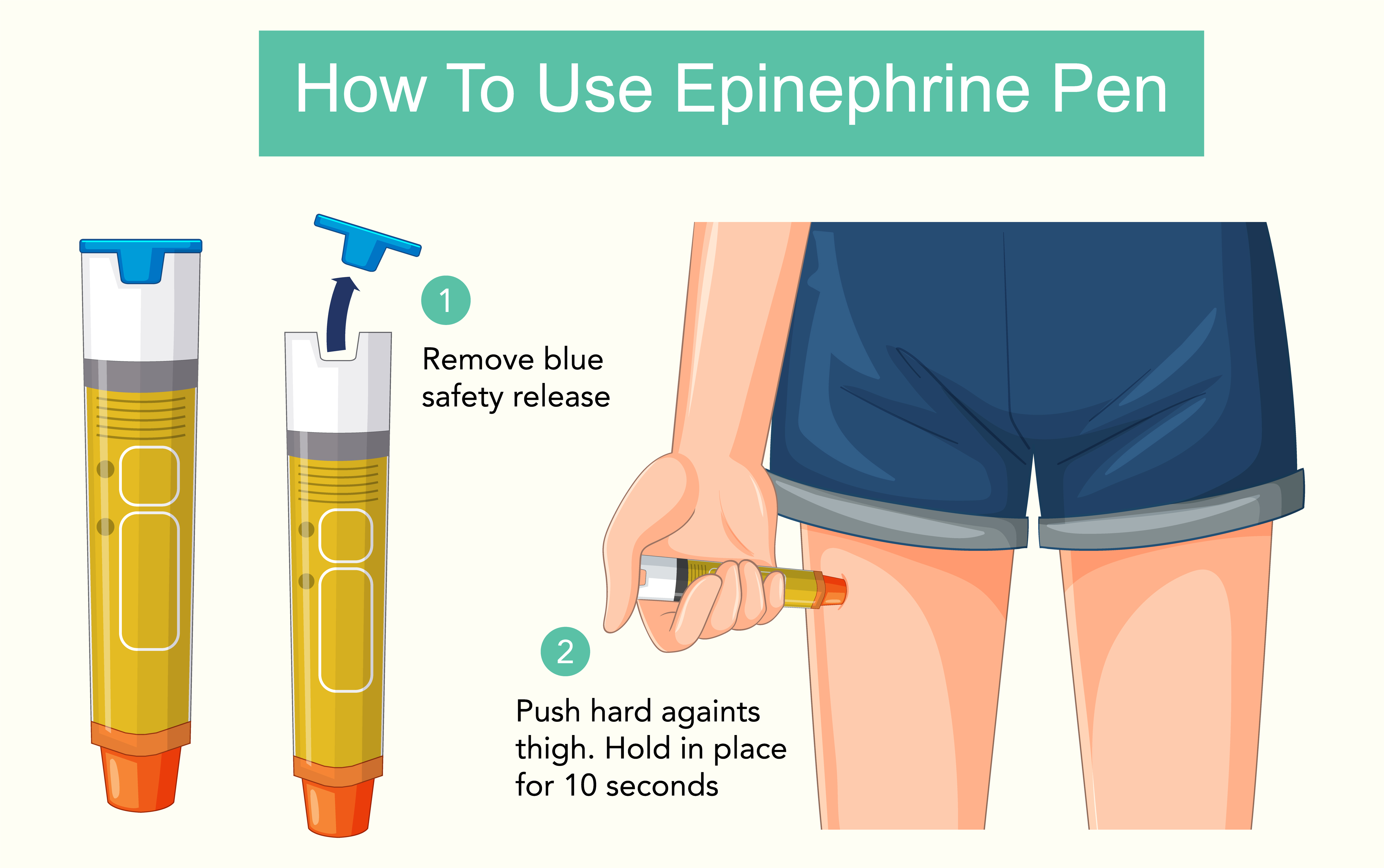
- How and when to administer an adrenaline auto-injector (adrenaline pens) schools keep on site
- Your school’s specific anaphylaxis school protocol
- How to support pupils with Individual Healthcare Plans in everyday educational settings
- Allergen risk management in food preparation areas, at lunchtimes, during trips, and at events
Build this into your staff CPD calendar now. Approved allergy awareness training providers for schools include Anaphylaxis UK, St John Ambulance, and AllergyWise from Allergy UK.
Providers like Anaphylaxis UK offer online training to schools in England for anaphylactic reactions.

Spare adrenaline auto-injectors on site
EpiPen schools UK are now legally required to stock spare, in-date AAIs at all times. These are not assigned to a specific child – they can be used on any person on site who experiences anaphylaxis, including adults and children with no prior diagnosis.
Approved suppliers for adrenaline auto-injector schools need to stock are listed in the Anaphylaxis UK guide.
For further compliance updates, read our previous blog on Ofsted 2026.
Individual Healthcare Plans and allergy action plans
Every pupil with a diagnosed food allergy, animal allergy, or venom allergy must have an allergy action plan school staff can access quickly. The Individual Healthcare Plan school staff rely on should include:
- Which allergens the child reacts to
- Typical symptoms they show
- Their prescribed medication and where it is kept
- Emergency contact details for their parent or carer
- Step-by-step emergency procedures
IHPs are created with input from parents, carers, the child where appropriate, and a healthcare professional where possible. They must be reviewed at least annually and updated immediately if there is any change in diagnosis, medication, or emergency contact.
What do after school clubs, breakfast clubs, and wraparound care providers need to do?
If your school runs an after-school club, breakfast club, wraparound care provision, or holiday programme on site, Benedict’s Law September 2026 applies to every one of those sessions. Allergy safety does not stop when the core school day ends.
In practice, this means:
- Breakfast club allergy requirements follow the same standard as the main school day
- After school club allergy policy must align with your whole-school allergy policy
- Wraparound care allergy policy must ensure staff have access to every attending child’s IHP before each session
- Holiday club allergy requirements apply to any on-site provision run by the school
Staff running every club and provision must have completed annual anaphylaxis training. Spare AAIs must be accessible during every session. Allergy information must travel with the child – from the school register into breakfast club, and from the school day into after-school provision. It cannot sit on a spreadsheet in the main office while children are at a club.
For clubs and providers working with schools but operating independently – such as external wraparound care providers on a school site – Benedict’s Law after school clubs guidance currently focuses on maintained school provision. However, the Food Safety Act 1990 and existing allergen regulations still apply, and it is strongly recommended that all providers adopt the same standards regardless of scope. Families will expect it, and children deserve it.
Managing allergy information across multiple provisions?
MagicBooking’s child health notes store allergy information, IHPs, and medical records for every pupil – accessible to staff running each session in real time, from breakfast club through to holiday provision.
Multiple clients have praised MagicBooking’s child notes features, which organise info like emergency contacts, allergy information, and accident reports. Read Emmer Green Primary School’s story.

How to write a school allergy policy that meets the new requirements
A compliant allergy policy schools UK must publish is a legal document. Here is a checklist of what it needs to cover:
- A clear statement of the school’s statutory duties under the school allergy safety bill and the statutory guidance on allergies for schools
- How the school identifies and records food allergy schools UK must manage at pupil intake and at annual review
- Allergen risk management across the full site – kitchens, classrooms, clubs, trips, and events
- Your emergency anaphylaxis school protocol, including who calls 999, where AAIs are kept, and who takes charge
- How Individual Healthcare Plans and allergy action plans are created, stored, shared, and reviewed
- Annual training requirements for all staff and how training is recorded
- The named allergy lead and annual review timeline
Anaphylaxis UK’s school allergy policy template is free to download. Further resources and guidance are also available from Allergy UK and the Benedict Blythe Foundation.
How to manage anaphylaxis training for all staff
Annual allergy training for every member of staff is one of the most significant operational changes Benedict’s Law UK brings. For many schools, formal medical training has historically been delivered to a small group of designated first aiders. That is no longer sufficient.
“Investing in allergy training has been absolutely necessary for our school. We have eight children with allergies, including one severe case, and while we always had healthcare plans in place, the structured training, emergency drills and support with policies have taken our procedures to the next level. For an annual cost, every member of staff is trained as soon as they join, we run scenario drills, and we’ve strengthened everything from lunchtime checks to school trip risk assessments – it gives our teachers real confidence in keeping children safe.” – Danielle Thackray, School Business Manager, Walbottle Village Primary School – GOV.UK, March 2026
To manage anaphylaxis training schools must now schedule annually for every member of staff:
- Book whole-school training before September 2026
- Add it to your staff CPD calendar as a fixed annual event
- Include every new staff member in your induction process from day one
- Keep records of who has completed training and when – you will need these for inspection
- Make sure training covers your specific school allergy protocol, not just generic anaphylaxis guidance

How to keep allergy records and Individual Healthcare Plans up to date
Writing a school allergy policy and scheduling annual training are important first steps. The harder, ongoing challenge is keeping allergy records accurate and accessible every day of the year.
Good allergy safeguarding in schools means:
- Every relevant staff member can find a child’s allergy action plan before every session they run
- Updates from parents – new diagnoses, medication changes, updated emergency contacts – appear in records immediately
- Allergy information is available across every provision a child attends on site
- New staff have access to the right records from their first shift, not after a slow handover
Schools and clubs that manage this through paper files or separate spreadsheets often find the system breaks down – especially when children attend multiple provisions, staff change, or a new diagnosis arrives mid-term. These are exactly the gaps that cost Benedict his life. School allergy management now needs to be systematic, not ad hoc.
How MagicBooking supports school allergy management
MagicBooking includes child health notes and allergy records for every pupil, alongside accident and injury reports – all in one system.
Staff running any session, whether that is the school day, wraparound care, or holiday provision, can see the allergy and medical information they need. Updates made by admin or parents appear in real time.
This is the kind of joined-up record-keeping that schools now need to demonstrate compliance. See MagicBooking’s register features for more.
Getting ready for Benedict's Law this September
Benedict’s Law UK is a legal standard that the education sector has needed for a long time. The four requirements it introduces – a published allergy policy, annual training, spare AAIs, and Individual Healthcare Plans – are clear, achievable, and necessary. Schools that act now will be better prepared for inspection this autumn and, more importantly, better placed to protect every child with an allergy in their care.
MagicBooking is a school booking system and school management platform used by over 2,000 schools and clubs across the UK. It includes child health and allergy notes for every pupil, accessible to staff running breakfast clubs, after-school clubs, wraparound care, and holiday programmes – exactly the provisions Benedict’s Law September 2026 now covers. If you are reviewing how your school or club manages medical records, registers, and provision this summer, we would be glad to show you how it works.
Book a free demo to find out more.
Frequently asked questions
What is Benedict's Law UK?
Benedict’s Law is statutory legislation enacted through the Children’s Wellbeing and Schools Act 2026 that makes allergy safety a legal requirement in all maintained schools, academies, and pupil referral units in England from September 2026.
Named after five-year-old Benedict Blythe, who died from anaphylaxis at school in 2021, the school allergy safety bill introduces four mandatory requirements: a published whole-school allergy policy, annual anaphylaxis training for all staff, spare adrenaline auto-injectors on site, and Individual Healthcare Plans for every pupil with a diagnosed allergy. The DfE allergy guidance schools must follow is set out in the statutory guidance Allergy Safety in Schools, available at GOV.UK.
When does Benedict's Law come into force?
Benedict’s Law September 2026 is the compliance date for all maintained schools, academies, and pupil referral units in England. Independent schools have until spring 2027. Schools should not wait until September – the school allergy requirements 2026 require policies to be published, training to be scheduled, AAIs to be ordered, and IHPs to be in place before term begins. Ofsted will inspect against the statutory guidance on allergies for schools.
Does Benedict's Law apply to after school clubs and wraparound care?
Yes. Benedict’s Law after school clubs, breakfast clubs, and wraparound care provisions are all covered where the school operates that provision on site. After school club allergy policy must align with the whole-school policy.
Wraparound care allergy policy must ensure staff can access each child’s IHP before every session. Breakfast club allergy requirements and holiday club allergy requirements follow the same standard as the school day. Allergy policy schools UK publish must cover all on-site provision, not just classroom time.
What must a school allergy policy include?
A compliant allergy policy schools UK must publish needs to cover: how children with food allergies at school are identified and recorded, allergen risk management across the full site, a clear anaphylaxis school protocol, where spare AAIs are stored, how Individual Healthcare Plans (IHPs) and allergy action plans are created and maintained, and annual training requirements for every member of staff.
It must be published as a standalone document on the school website and reviewed annually. A free school allergy policy template is available from Anaphylaxis UK.
Do all school staff need anaphylaxis training under Benedict's Law?
Yes. Annual anaphylaxis training schools must provide covers every member of staff on site – including catering, admin, cleaning, lunchtime, and support staff, not just teachers. Allergy training for teachers and all other staff must be renewed every year. Training should cover how to recognise anaphylaxis, how to administer an adrenaline auto-injector, and the school’s specific allergy protocol.
This is one of the most significant operational changes the school allergy safety bill introduces, and schools should begin scheduling training now ahead of September 2026.